
Memory Fabric
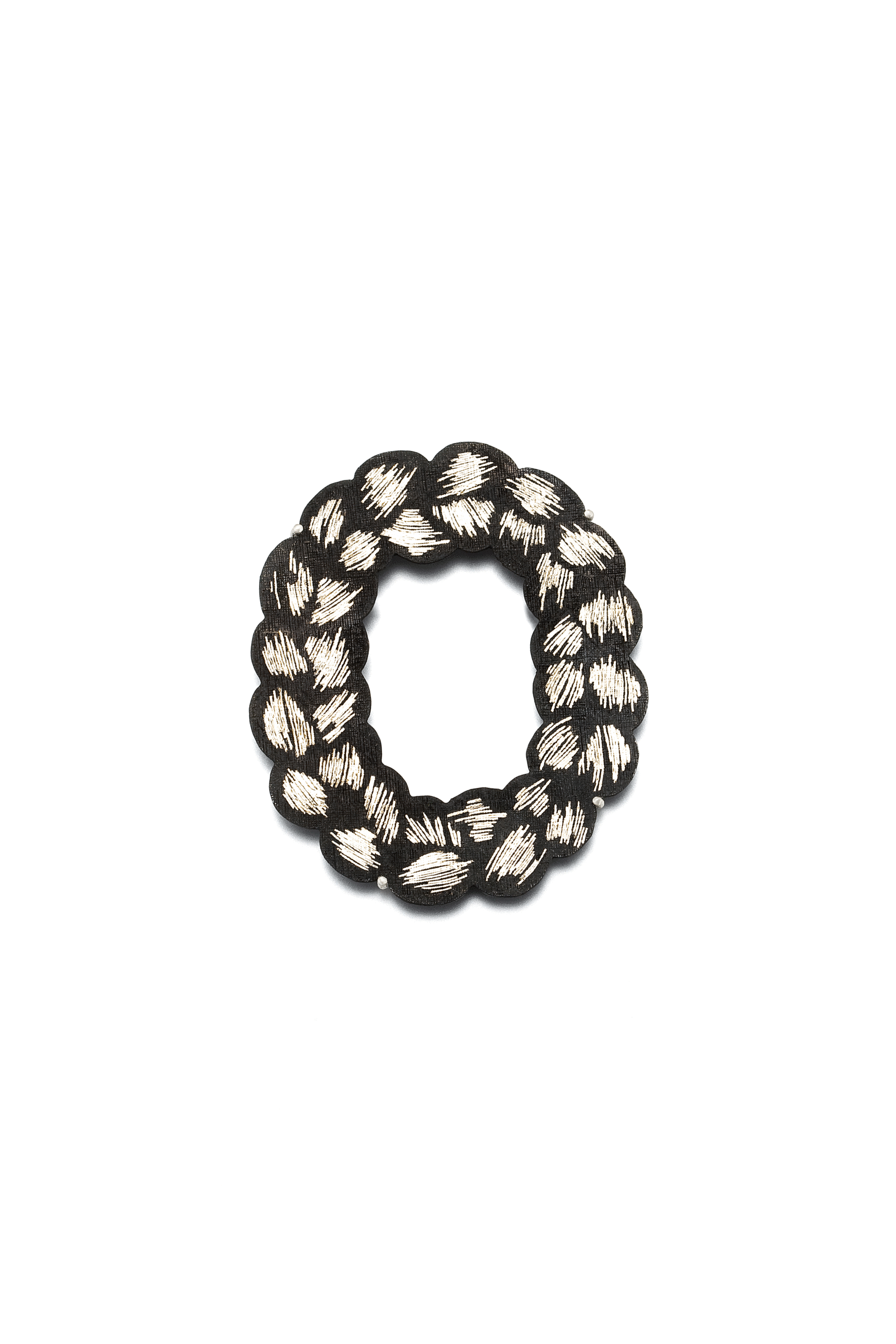
Braid, 2025, Iron, fine silver, stainless steel, 10,7 x 8,9 x 0,8 cm, brooch
The Memory Fabric brooch series explores the essence of the Korean damascening technique Ipsa (also spelled Ibsa and sometimes referred to as Pomok Sanggam), while evoking the history of women’s hairstyles during the Joseon dynasty in South Korea. Through this project, the intention is not only to highlight an ancient metallurgical practice, but also to reveal its symbolic and mnemonic dimensions, questioning what is inscribed on the surface of metal.
This work is closely connected to my training in Seoul, where I first discovered this demanding and delicate technique. In Memory Fabric, I use silver wire to represent braided hair. The analogy between metal wire and hair felt immediately evident to me: both are fine and seemingly fragile, yet charged with strong symbolic meaning.
During the Joseon dynasty, women’s hairstyles were not merely aesthetic choices, but followed strict social codes. Hairstyles and ornaments varied according to status, age, and marital situation: young girls wore their hair long and braided, while married women styled it into a bun secured with a binyeo (hairpin). Hairstyle functioned as a marker of social identity and as a silent language, situating each woman within a precise cultural and hierarchical framework. Certain practices considered excessive — such as the wearing of large wigs (gache) — were even prohibited or regulated by authorities to limit displays of luxury and ostentation. Hair thus stood at the intersection of tradition, social norms, and individual expression.
The parallel with science further deepens the connection between hair and memory. Hair constitutes a true biological archive: it retains the memory of the body, which scientists can read centimeter by centimeter. Each centimeter corresponds to approximately one month of life, making it possible to trace periods of well-being, stress, or imbalance — a silent lifeline inscribed in matter. This biological reading resonates with the symbolic and cultural interpretations of hair throughout human history.
It seemed both natural and deeply meaningful to work with motifs related to hair, as they embody both the intimate and the universal: the singularity of an individual experience and its grounding in a collective tradition. In this context, silver wire becomes a transfigured lock of hair — both a material trace and a poetic metaphor.